

43" x 75" Sanding Belt, 2 PACK Cloth Closed Coat A/O / 60 Grit
Add 2 more to save 10%.

Available in stock (49998)
Check return eligibility and fees
A 37-inch single-head wide belt sander is the most common machine size in small and mid-size metal fabrication shops, and a non-woven belt is what turns it from a sanding machine into a finishing machine. These 37" x 60" surface conditioning belts lay a straight, repeatable grain line across stainless, aluminum and steel sheet, blend the scratch left by the coated belt before them, and take burrs off cut edges without touching the part's dimensions.
They are built from aluminum oxide grain locked in a nylon web on a reinforced scrim backing, so they track and hold tension on an automated head the way a cloth belt does. Four grades are stocked, Coarse, Medium, Very Fine and Ultra Fine, each sold as a single belt.
Think of the four grades as four finishes rather than four grits. The web construction is identical; the grain inside it changes.
For a shop that grains stainless for a living, Very Fine is the working belt and Medium is the deburring belt. Coarse and Ultra Fine are for specific jobs.
| Grade | Use it for | Notes |
|---|---|---|
| Coarse (40–60) | Rust, oxidation, mill haze, coarse brush on aluminum | Lightest pressure; removes stock at load |
| Medium (80–120) | Deburring cut parts, satin before coating | Follows a 120 grit coated belt |
| Very Fine (180–240) | #4-style finish on stainless sheet | Follows a 180–220 grit coated belt |
| Ultra Fine (320–400) | Fine satin, pre-buff on stainless and aluminum | Refines a Very Fine finish only |
The sequence for a #4-style finish from raw 2B stainless sheet is a 120 grit coated belt, a 180 or 220 grit coated belt, then the Very Fine non-woven belt, all fed in the same direction. Skipping the 180–220 coated step leaves the 120 scratch visible under the satin.
Length tolerance on most machines is about a quarter inch, so a belt marked 60 inches fits a machine specified at 60. The belt has no direction arrow and can be mounted either way. Set tension to the maker's figure, jog the machine and centre the oscillation, and start with the head backed off from the coated-belt setting; the web is thicker and more compliant and needs less pressure to make full contact. Metal swarf must go to a metal-rated or wet collector, never a wood-dust system, and a woodworking machine converted to metal should have its conveyor belt and hold-downs cleaned of sawdust first.
Use it for
Don't use it for
| Size | 37" wide x 60" long |
|---|---|
| Abrasive | Aluminum oxide grain in a non-woven nylon web |
| Backing | Reinforced scrim for automated wide belt machines |
| Grades offered | Coarse (40-60), Medium (80-120), Very Fine (180-240), Ultra Fine (320-400) grit equivalents |
| Colour code | Brown, maroon, blue, grey |
| Joint | Bi-directional; no direction arrow |
| Pack quantity | One belt per order |
| Wet or dry | Dry; light lubricant acceptable on aluminum |
| Materials | Stainless, aluminum, steel, titanium, non-ferrous alloys, fiberglass, plastics |
| Converted in | Anaheim, California |
| Custom sizes | Made to order in about 3 days |
It fits any 37-inch single-head wide belt sander whose manual specifies a 60-inch belt, which includes machines in the Grizzly 37" and SuperMax 37x2 class. Some 37-inch machines, including Timesaver 37 models, are specified for a 75-inch belt; check the manual and order the length it calls for. We stock both.
Take the sheet to 180 or 220 grit with a coated aluminum oxide belt, then run the Very Fine (180-240 Grit) belt. From raw 2B stainless that usually means 120 then 180 or 220 on the coated head. The Very Fine belt refines and unifies that scratch; it cannot remove a 120 grit scratch on its own.
Heat tint means the sheet is getting hot under the head. On a non-woven belt the causes are too much head pressure, too slow a feed with the head loaded, or a worn belt that is rubbing rather than cutting. Back the pressure off, restore the feed speed, and replace the belt if the web is thin or glazed.
Yes, if it takes a 37" x 60" belt. The belt tracks and tensions like a cloth belt. The precaution is swarf: steel or aluminum dust and wood dust must never share a collector because of the fire risk. Fit a metal-rated or wet collector and clean sawdust out of the conveyor and hold-downs before running metal.
Very Fine (180-240 Grit) gives a visible directional brush with moderate contrast, the standard architectural and appliance look. Ultra Fine (320-400 Grit) gives a finer, lower-contrast satin that reads almost smooth to the eye and is the last step before buffing. Ultra Fine is run after Very Fine, not instead of it.
Yes. The same cool-running, low-pressure action that suits metal works on fiberglass, composites and plastics, where a coated belt tends to load and burn. Medium is the usual grade for a uniform matte on plastic and fiberglass panels; Very Fine gives a finer satin. Keep extraction strong for the dust.
Each order is a single 37" x 60" belt in the grade you select. Shops that keep a coated belt and a non-woven belt on the machine usually order a Very Fine and a Medium together. Orders over $200 ship free. For quantity or case pricing call 714-646-3299 or email sales@maverickabrasives.com.
Couldn't load pickup availability
Your payment information is processed securely. We do not store credit card details nor have access to your credit card information.

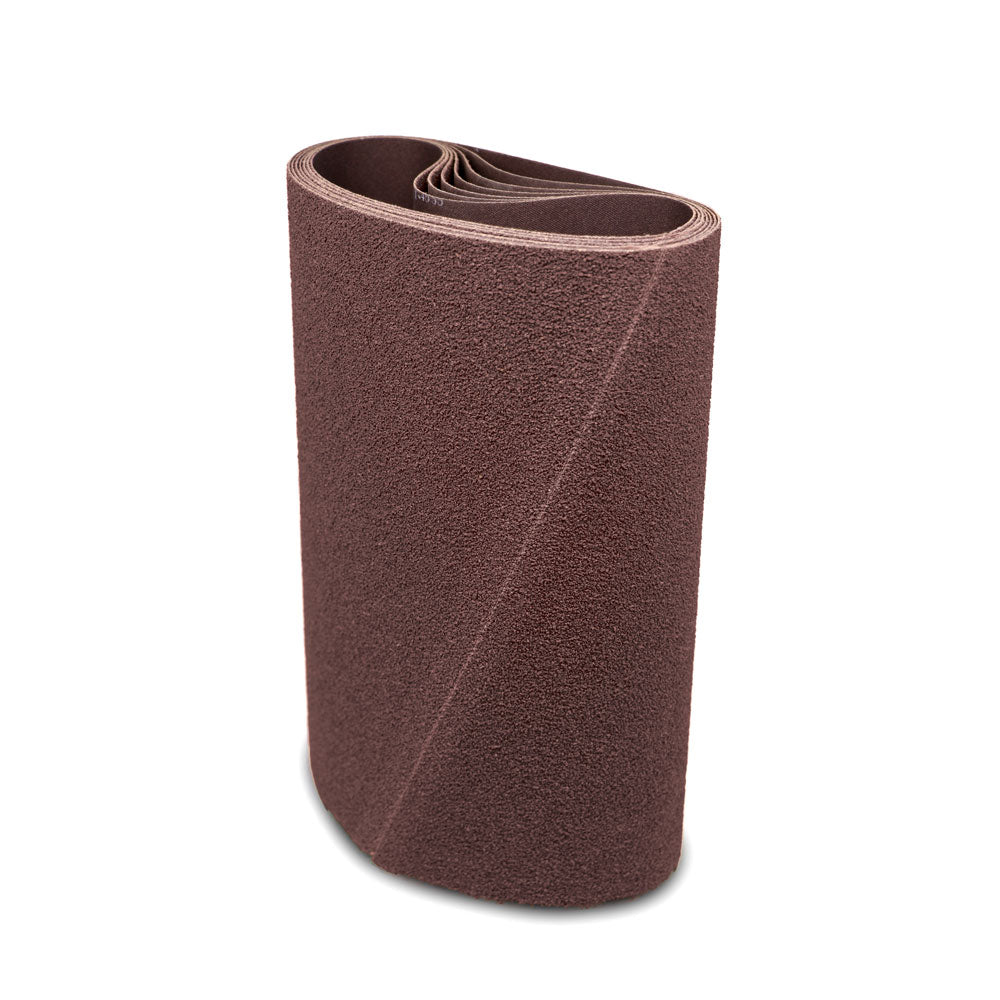
43" x 75" Sanding Belt, 2 PACK Cloth Closed Coat A/O / 60 Grit
Add 2 more to save 10%.
Each exact grit or variant qualifies separately. Different grits do not combine toward a tier. If another promotion offers more, Shopify applies the best eligible discount instead of stacking them.